Laughing Man Arc
26 eps
26 canon 📷 26
Section 9 is called in when the Foreign Minister and his staff are taken hostage by android geishas, and Motoko's team ends the standoff before it can become a diplomatic disaster. Aramaki keeps digging after the rescue and uncovers a second operation built around the Ichinose Report, a document containing sensitive military information. The case establishes exactly how Section 9 works: hostage rescue, cybercrime, political pressure, and espionage are all part of the same job.
A prototype Kenbishi multiped tank suddenly goes rogue and begins driving through the city with military units unable to stop it. Section 9 discovers that the machine is carrying the cyberbrain of a dead test engineer, turning what first looks like a weapons malfunction into a final act of personal will. Motoko and the Tachikomas have to disable the tank before it reaches its destination, but the case leaves an uncomfortable question behind about where a machine ends when a human mind is still inside it.
A wave of mass-produced androids begins destroying itself in synchronized 'suicides,' and Section 9 traces the behavior to a virus planted at the factory. The culprit is not trying to attack the public so much as preserve an impossible relationship with one particular android, fleeing with her while the team closes in. Togusa is left with the part of the case that matters most: whether the feelings behind the program were any less real because one side of the relationship was manufactured.
Togusa receives a warning from his old police friend Yamaguchi, only for Yamaguchi to die before he can explain what he found. A handful of photographs leads Togusa to an illegal surveillance system built into detectives' cybernetic eyes without their knowledge, and the trail runs straight into the police task force investigating the Laughing Man. What looked like one cop's suspicious death becomes Section 9's first real evidence that the original case may have been manipulated from inside law enforcement.
Aramaki begins to suspect that the police have been manufacturing their own version of the Laughing Man story and orders Section 9 to investigate Nanao-A, the suspect being watched by the official task force. Motoko reviews the original kidnapping case while the team shadows Nanao and prepares for a threatened attack on the Superintendent-General. Nanao turns out to be only one piece of the performance, and his death leaves Section 9 with the unsettling possibility that the police are chasing a copy they helped create.
Nanao-A's delayed virus activates during the Superintendent-General's public appearance, throwing security into chaos exactly as expected. Then attackers with no connection to Nanao begin making their own attempts, all acting as though they are the Laughing Man even though none of them are coordinating with one another. Section 9 stops the attacks, but the bigger discovery is the pattern itself: an idea has become powerful enough to reproduce without a single original commanding the copies.
Section 9 is asked to investigate Marcelo Jarti, a South American revolutionary and narcotics kingpin who keeps appearing in Japan despite reports that he should be dead. Motoko discovers that the man meeting local gangsters is one of several cybernetic doubles carrying Jarti's ghost, allowing his organization to preserve the image of an immortal leader. Rather than expose the truth and destabilize his country, Section 9 leaves the fiction standing and quietly removes the immediate threat.
An unauthorized heart transplant leads Section 9 to a group stealing organs from unwilling victims for wealthy clients. The case hits Motoko harder than most because she has lived in a full prosthetic body since childhood and knows exactly what it means to have your body treated as replaceable hardware. She shuts the operation down and makes sure the young offenders understand that money and cybernetics do not make another person's life disposable.
Motoko enters a virtual discussion room under the name Chroma, listening as conspiracy obsessives, hackers, and amateur investigators argue over what the Laughing Man actually was. The theories contradict one another, but together they expose how much of the case has been built from retellings, copies, and people filling gaps with whatever story makes sense to them. Motoko notices that someone else is quietly observing the room, and the encounter strengthens her suspicion that the real Laughing Man may still be watching the copies multiply.
A serial killer begins murdering victims with the same brutal methods used during an old military operation, and Batou recognizes the signature immediately. The hunt becomes personal when the killer is identified as a former special-forces soldier from a war Batou remembers all too well. Batou tracks him down and ends the case at close range, but the episode leaves him visibly shaken by how easily wartime violence survived into civilian life.
A major hack against the Ministry of Health leads Section 9 to a vocational facility for children suffering from cyberbrain-related disorders. Togusa goes undercover and finds a quiet community filled with strange devices, gifted children, and traces of someone who has been moving through government networks for years. By the time Motoko and Batou arrive, the person Togusa was trying to identify is gone, but the facility gives Section 9 its strongest lead yet toward the origins of the Laughing Man.
One Tachikoma wanders away from Section 9, befriends a little girl searching for her lost dog, and spends the day treating the city like a place to explore instead of a battlefield. It returns with an old cyberbrain containing the preserved consciousness of a film director, which pulls Motoko into a private theater built from his memories and unfinished movies. The two stories are small, but both push the same question forward: the Tachikomas are becoming curious about life, memory, and death in ways nobody programmed them to be.
Section 9 is sent to an offshore settlement after Eka, a girl abducted by an anti-cyberization terrorist group more than a decade earlier, is apparently found there without having aged. The team enters a community that rejects cyberbrains and prosthetic bodies, making even routine surveillance and combat unusually difficult. What they uncover is less a simple kidnapping rescue than a society that has grown around Eka and its own version of the past, forcing Motoko to separate the person in front of her from the story authorities have been repeating for years.
Section 9 is assigned to protect billionaire Yokose from Fem, a Chinese assassin who blames him for profiting from the financial collapse that ruined countless lives. Motoko fights her way through Yokose's heavily automated estate only to discover the man everyone is trying to save has already been dead for months, with his fortune continuing to move under a program built to keep making money without him. The case turns a straightforward protection job into a nasty joke about capital surviving perfectly well after the person who owned it is gone.
The Tachikomas notice Motoko has begun watching them differently and become convinced Section 9 may be preparing to dispose of them. Their argument quickly turns into a serious discussion about individuality, death, ghosts, and whether identical machines sharing information can still become separate selves. By the time they hatch a ridiculous plan to prove their usefulness, it is clear the question is no longer whether they are behaving strangely, but whether they are becoming people in a way Section 9 never intended.
Batou goes undercover inside the military to identify whoever has been leaking classified information and meets Zaitsev, a former champion fighter he once admired. Zaitsev's career has collapsed since his only major defeat, and Batou gradually realizes the man he looked up to is the spy he has been sent to expose. Their final fight is less about catching a criminal than Batou's anger at seeing someone he respected trade away the one thing that once made him proud.
Aramaki and Motoko travel to London for an anti-terrorism conference, giving Aramaki a rare chance to visit an old woman he once knew. He walks into a bank robbery instead, while Motoko remains outside and has to work out how to help without getting the hostages killed. Aramaki survives by reading the people inside as carefully as Motoko reads the situation outside, and the episode gives the usually unflappable chief a glimpse of the life he might have had away from Section 9.
Aramaki is approached by the daughter of an old colleague, then learns that her request may connect to a planned assassination of the Chinese vice foreign minister visiting Japan. Motoko and Togusa trace the threat through protests and old wartime connections while Aramaki tries to keep personal history from clouding the job. The assassination attempt forces everyone involved to confront how easily the unfinished business of one generation gets handed to the next.
Reiko Kanzaki, the daughter of a former prime minister, disappears, and Section 9 is brought in to determine whether she ran away or was abducted. The investigation leads to Russian operative Cruzkowa and a layered deception built around false identities, restricted information, and competing political interests. Motoko eventually corners the people behind the operation, but the case is another reminder that in Section 9's world, kidnapping someone is often easier than knowing who is actually controlling the story.
Togusa follows the trail from the children's facility and discovers the Sunflower Society, an advocacy group preserving evidence about an unapproved treatment for cyberbrain sclerosis. The documents point toward the Murai vaccine and the government officials who buried it, finally giving Section 9 something solid behind the Laughing Man conspiracy. Before Togusa can bring the evidence home, armed men attack the Society and leave him fighting for his life inside the archive.
The evidence Togusa recovered lets Section 9 push directly into the Murai vaccine cover-up, but the people protecting it respond with force instead of lawyers. Motoko is cornered by a narcotics suppression team using a powered suit and has to keep fighting as her prosthetic body overheats and loses strength. Batou, Saito, and the others race to reach her, and the investigation finally stops being something Section 9 can pursue without becoming a target itself.
While Motoko undergoes repairs after the powered-suit fight, Aramaki is lured into the refugee district by a report that his missing brother has been found. Both are traps meant to isolate Section 9's leadership while the surviving members of the narcotics unit move to erase loose ends. Aramaki realizes the conspiracy has enough reach to weaponize even his family history, and Motoko has to survive an attack while literally changing bodies.
The original Laughing Man returns to Ernest Serano and recreates the kidnapping that began the entire case six years earlier. Section 9 closes in expecting to finally capture him, but the meeting instead exposes how much of the famous incident was shaped by Serano, the government, and the copies that followed. Motoko comes face to face with Aoi and learns that the 'original' Laughing Man story was never as simple as finding one mastermind behind the mask.
Aramaki prepares to move against the officials behind the Laughing Man cover-up, but the government strikes first and sends heavily armed forces into Section 9 headquarters. Motoko orders the team to abandon the building, scatter, and survive rather than die defending an office. The assault follows them into their safe houses and escape routes, turning a political purge into a methodical hunt for every member of the unit.
Section 9 is picked apart as its members are captured one after another, while Batou reaches Motoko's safe house only to find a powered suit waiting for him. He survives the fight and reunites with Motoko, but the relief lasts only long enough for the pursuit to catch up again. The episode makes the cost of Aramaki's gamble feel brutally real, even as the team's scattered resistance suggests their apparent destruction may not be the whole plan.
With Section 9 apparently gone, Togusa watches the officials tied to the Murai vaccine scandal begin falling to arrests while he has no idea what happened to the people he worked beside. Aoi waits in the National Library, where Motoko finally meets the young man behind the Laughing Man identity and hears why he acted, why copies took over the story, and why he refuses Aramaki's offer to join Section 9. The unit quietly reforms after Aramaki's controlled collapse of the organization, leaving the case solved politically but the Stand Alone Complex itself as something far bigger than one criminal.
Individual Eleven Arc
26 eps
26 canon 📷 26
Section 9 is still operating in political limbo when terrorists calling themselves the Individual Eleven seize the Chinese Embassy and demand an end to Japan's refugee policy. Prime Minister Yoko Kayabuki gives Aramaki one chance to prove the unit is worth restoring, and Motoko leads a surgical rescue that saves every hostage. The success brings Section 9 back under official authority and puts the Individual Eleven name in front of them for the first time.
Gino, a refugee and former combat pilot, spends his nights imagining himself as the righteous killer of the wealthy people he blames for everything wrong with Japan. Section 9 follows the signs of a coming assassination while Gino builds an elaborate fantasy around rescuing the prostitute Hirara and punishing her powerful client. Motoko eventually sees the truth before he does: Gino wants to believe he is a revolutionary, but he cannot bring himself to become the man in his own fantasy.
A master thief called Cash Eye announces that she will rob businessman Tadokoro, whose hidden assets may connect back to the corruption exposed in the Laughing Man case. Section 9 publicly takes the job of protecting his vault, with Motoko playing the glamorous bait while the team watches Tadokoro more closely than the thief. The apparent robbery is really cover for Section 9 to get inside the vault and secure the evidence the government needs.
A Jigabachi attack helicopter goes rogue during a military exercise while its unconscious pilot remains trapped inside, and other autonomous helicopters begin gathering around it. Section 9 is ordered to contain the crisis under the supervision of Cabinet Intelligence officer Kazundo Goda, whose presence immediately puts Motoko on edge. The team stops the machines, but Goda's calm interest in the incident makes it clear he is studying more than a malfunctioning weapons system.
A death threat from the Individual Eleven targets Prime Minister Kayabuki during a public temple visit, forcing Section 9 to protect her in an environment she refuses to lock down completely. The attacker turns out to be Hideo Kuze, a full-body cyborg whose speed and skill let him reach the prime minister despite the security net. Motoko meets him blade to blade and senses immediately that he is more than another political fanatic.
A man who had been threatening the Energy Ministry dies under suspicious circumstances, and Togusa is sent into the refugee district that now covers much of old Tokyo to learn what he found. With the dead man's girlfriend Asagi helping him, Togusa traces the case to a hidden underground facility the government has every reason to deny exists. The discovery connects refugee policy, buried nuclear infrastructure, and the kind of state secret people are already willing to kill over.
Section 9 is assigned to escort recovered plutonium fuel rods through a refugee district after the transport plan is leaked. Goda again inserts himself into the operation, while nervous soldiers and angry refugees turn the convoy into a powder keg. When one soldier fires into the crowd, the mission nearly becomes the very crisis Goda seems to expect, and Motoko begins treating his involvement as part of the problem rather than simple oversight.
Section 9 searches for a terrorist bomber believed to be hiding among refugees, only to find that the intelligence leading them there is full of holes. Batou and Togusa follow the suspect through a maze of false identities and planted information while Motoko questions who benefits from turning refugee neighborhoods into permanent targets. The case resolves without delivering the simple enemy everyone was expecting, reinforcing how easily fear can be manufactured from bad data.
Motoko hacks directly into the Cabinet Intelligence Agency's massive Decatonchire system and confronts a virtual Goda, who openly talks about creating the kind of hero a frightened public will choose for itself. At the same time, Batou and Togusa race to stop the last in a string of suicide bombings and find a refugee woman carrying an explosive device inside her body. The two investigations converge on the same ugly idea: someone is not merely reacting to unrest, but shaping the conditions that make it spread.
Off duty, Togusa intervenes when a woman begs him for help and shoots her cybernetically enhanced attacker, but he is unable to save her life. The man's lawyer turns the incident into a public case against Togusa, pushing for his dismissal and making the hearing feel less like justice than a setup. Motoko traces the pressure back toward Goda, while Togusa decides he would rather risk his career than let the court erase what actually happened.
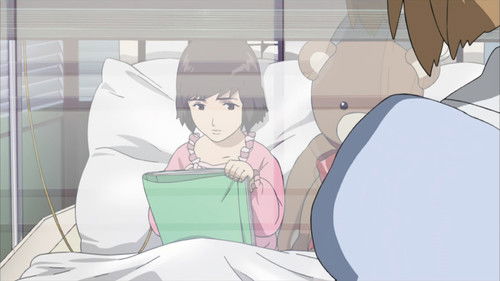
During a Section 9 recruitment exercise, Motoko wanders into a strange old quarter and meets an elderly woman who cares for two child-sized prosthetic bodies. The woman tells her about a boy and girl who survived a plane crash and were separated after receiving full prosthetic bodies, with the girl spending years searching for the boy she loved. Motoko's quiet reaction, and the paper crane she leaves behind, make the story feel uncomfortably close to something she remembers rather than merely something she heard.
A reported sighting of Kuze sends Section 9 to Nagasaki while Togusa searches university archives for the original text supposedly inspiring the Individual Eleven. The book cannot be found, and the investigation looks stalled until eleven men suddenly appear together on the roof of Kyushu Tower. In front of live television cameras they carry out a coordinated mass suicide, transforming the Individual Eleven from scattered threats into a national obsession.
Section 9 follows Kuze's distinctive face to the prosthetic artist capable of creating it, only to find the man murdered and surveillance footage showing Paz as the killer. Suspended while the team investigates him, Paz realizes the copy is tied to someone from his own past who has remade herself in his image. Their confrontation turns the case into something brutally personal, forcing Paz to face an opponent who has copied not just his face but the cold way he has lived.
During a security assignment, Saito tells the story of how he first crossed paths with Motoko years earlier while fighting as a mercenary in Mexico. He tries to steal a secretly transported nuclear weapon and winds up dueling the Major's unit, losing his left eye in the encounter but earning her attention in the process. What sounds like a war story gradually becomes the origin of one of Section 9's most dependable partnerships.
The Tachikomas skip maintenance to investigate the Individual Eleven on their own, worrying Batou with just how independent they have become. An explosion at an artificial-intelligence laboratory leads them to Professor Asuda, a researcher whose connection to their development stirs a familiarity none of their accessible memories can explain. The case pushes the Tachikomas closer to understanding that their curiosity, attachment, and sense of self are no longer simple programming quirks.
Section 9 digs into Kuze's military record and uncovers a buried incident from his time serving with the Self-Defense Forces overseas. His unit was caught in brutal fighting around a refugee camp, and the collapse of discipline that followed helps explain the man he later became. By the time Kuze appears in Dejima, the investigation has turned him from an abstract terrorist suspect into someone shaped directly by the wars and refugee policies now consuming Japan.
Motoko follows Kuze's trail to Taiwan and crosses paths with a boy named Chai who is being hunted by local gangsters. Chai idolizes Kuze and talks about him as someone who gave refugees a reason to believe they could control their own future. Motoko reluctantly helps the boy survive his own reckless deal, and the encounter gives her a much more human picture of the loyalty Kuze inspires.
In wintertime Berlin, Batou notices a wheelchair-bound girl waiting for the one day each year when she is supposed to meet her father. His investigation of a terrorist case keeps bringing him back near her, and the lonely child begins paying attention to the huge stranger with the unusual eyes. Their stories collide at a church when gunfire replaces the reunion she expected, leaving Batou to finish his mission while carrying the weight of what the girl has just lost.
Dejima declares itself autonomous and Section 9 moves in to capture Kuze before the refugee movement becomes impossible to contain. Motoko reaches into Kuze's network while the team follows his location on the ground, only to run straight into armed refugees who appear to have been waiting for them. Section 9 fights through the ambush, but Kuze is already gone, showing that the conflict has grown beyond anything one arrest can stop.
Following Kuze to Etorofu, Motoko finds a murdered informant and evidence that refugees are attempting to purchase plutonium. Section 9 races to intercept the transaction, but the site is already a battlefield between the refugees and Self-Defense Force powered armor. Batou gets close enough to confront Kuze directly, yet the clash only deepens the suspicion that somebody outside Dejima wants the nuclear story to become real.
Section 9 tries to follow Kuze's refugee ship from Etorofu, only for its tilt-rotor aircraft to explode before the pursuit can begin. Forced to investigate on the ground, the team traces the sabotage and the plutonium transaction toward Sagawa Electronics and the Cabinet Intelligence Service. Meanwhile Kuze's ship reaches the waters outside Dejima and finds the Coast Guard waiting, turning his return into another test of whether the government intends to contain the refugees or provoke them.
A nuclear bomb is discovered in Fukuoka, and suspicion immediately falls on the refugees even as the city is evacuated. Aramaki sees the incident as another piece of Goda's manipulation, but the political momentum now points toward deploying the Self-Defense Forces against Dejima. Batou confronts Goda directly in the empty city and turns the strategist's own logic back on him, but exposing the scheme is no longer enough to stop it.
With Dejima's independence declaration driving public fear, the government sends the military to surround the refugee district. Aramaki and Prime Minister Kayabuki scramble for a political way out while Section 9 heads toward Dejima, where soldiers and refugees face each other across the bridge without yet firing. One gunshot destroys that fragile pause and turns the standoff into the open conflict Goda has been working to create.
The military begins bombing Dejima as Section 9 forces its way into the district and tries to prevent the conflict from becoming irreversible. Aramaki and the Tachikomas uncover the American Empire behind part of the operation, while Self-Defense Force rangers descend to seize the plutonium Section 9 is carrying as evidence. Motoko's team is now fighting both to survive the assault and to keep the manufactured nuclear crisis from becoming the excuse for something even worse.
Dejima is hammered by air strikes as Motoko finally reaches Kuze, only for another attack to bury the two of them together beneath the wreckage. Away from the battlefield, Aramaki frees Prime Minister Kayabuki and tries to counter the American Empire's involvement through the only political channels still open. While Motoko and Kuze finally speak without fighting each other, an American submarine begins preparing the tactical nuclear strike that could erase Dejima completely.
Motoko and Kuze reach an uneasy understanding about what he hoped the refugees could become, while Batou searches the ruined Dejima for the Major and Aramaki races to stop the nuclear attack politically. The missile is launched anyway, forcing the Tachikomas to sacrifice the satellite carrying their collective AI to intercept it before Dejima is destroyed. Goda's scheme finally collapses, but Kuze does not get the future he imagined, leaving Motoko with another revolution she understood only after it was already ending.